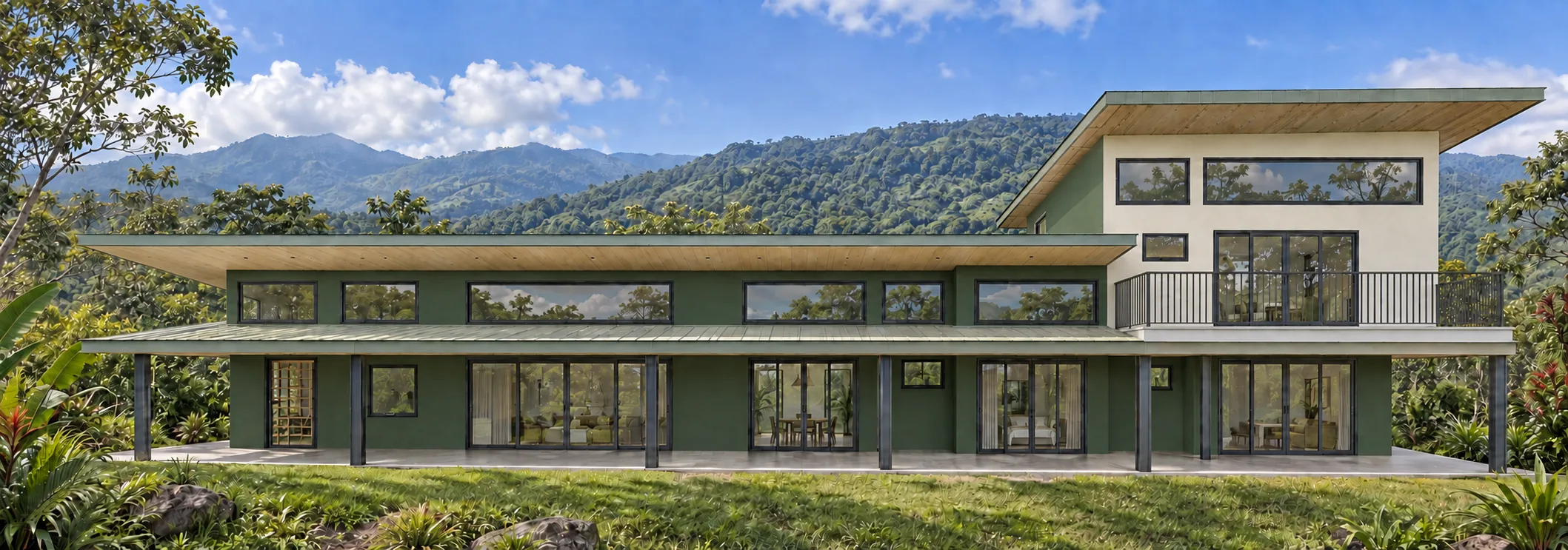
Outdoor light is stronger and less predictable
Direct sun can make a color appear lighter and less saturated, while deep shade can make the same paint feel cooler or grayer. The balance changes by orientation, hour, season, cloud cover, and roof overhang.
That is why a small indoor chip and a digital preview are useful for comparison but cannot predict an exact finished appearance.
The surroundings become part of the color
Vegetation can cast green reflected light. Warm paving and soil can push a pale wall warmer. A bright neighboring wall, blue sky, dark roof, or large shaded porch can all change what your eye perceives.
- Review the color beside roofing, stone, brick, and window frames.
- Check both the brightest and most shaded elevations.
- Compare complete wall-and-trim schemes rather than isolated swatches.
Use a staged decision process
Use visualization to explore broadly and compare relationships across the whole house. Reduce the options to a small shortlist, then paint large physical samples on the actual exterior or on movable sample boards. Revisit them through the day before making the final purchase.