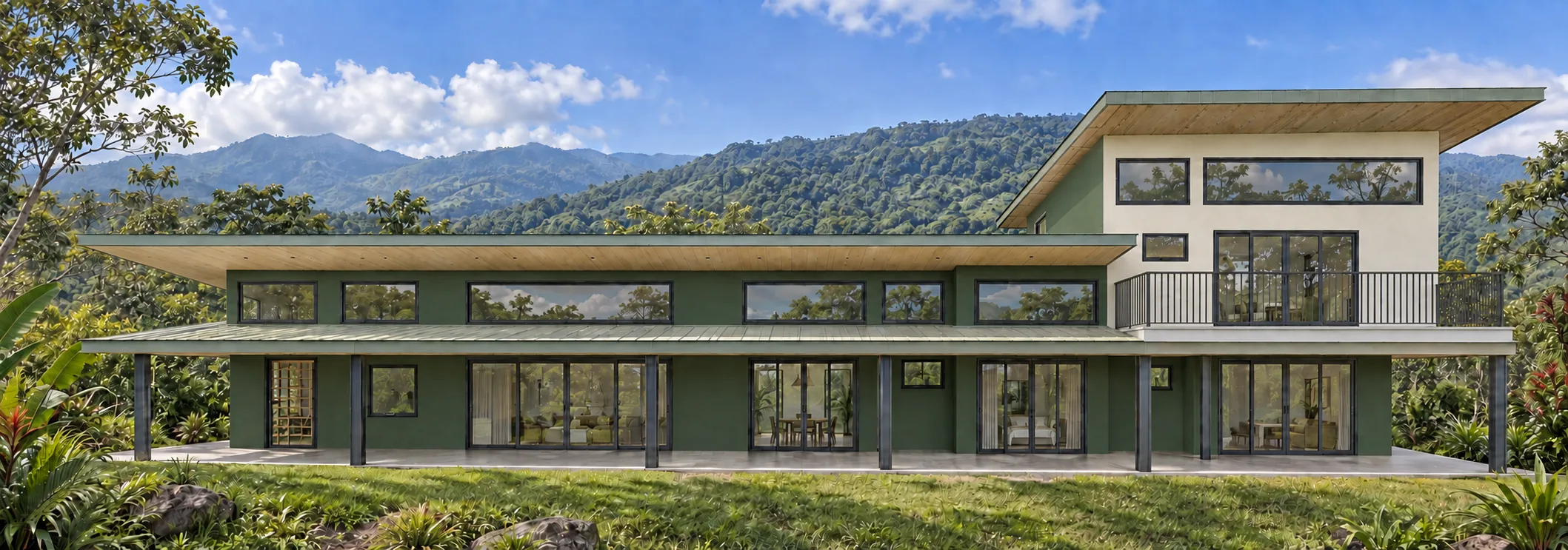
Map the light before judging color
East-facing walls receive stronger morning light, while west-facing walls often experience intense late-day sun. North and south behavior varies with latitude, season, roof overhangs, neighboring buildings, and landscape. Direction is a useful starting point, not a complete prediction.
Walk around the house at several times and note which walls are bright, shaded, or receiving reflected color. Deep porches and eaves may matter more than compass direction on some homes.
Expect one color to shift
Strong sun can wash out saturation and raise apparent lightness. Shade often reveals cool or gray tendencies. Warm late-day light may enrich cream, clay, or red and temporarily soften some cool colors. The goal is a color that remains acceptable across these shifts, not one that looks identical everywhere.
- Place the same sample on at least two different elevations.
- Check the front elevation when it matters most to you visually.
- Include reflected light from paving, roofs, vegetation, and neighboring walls.
Make the decision over time
Leave large samples in place for several days if possible. Photograph them only as a record; make the decision with your eyes on site because cameras apply their own exposure and color adjustments.