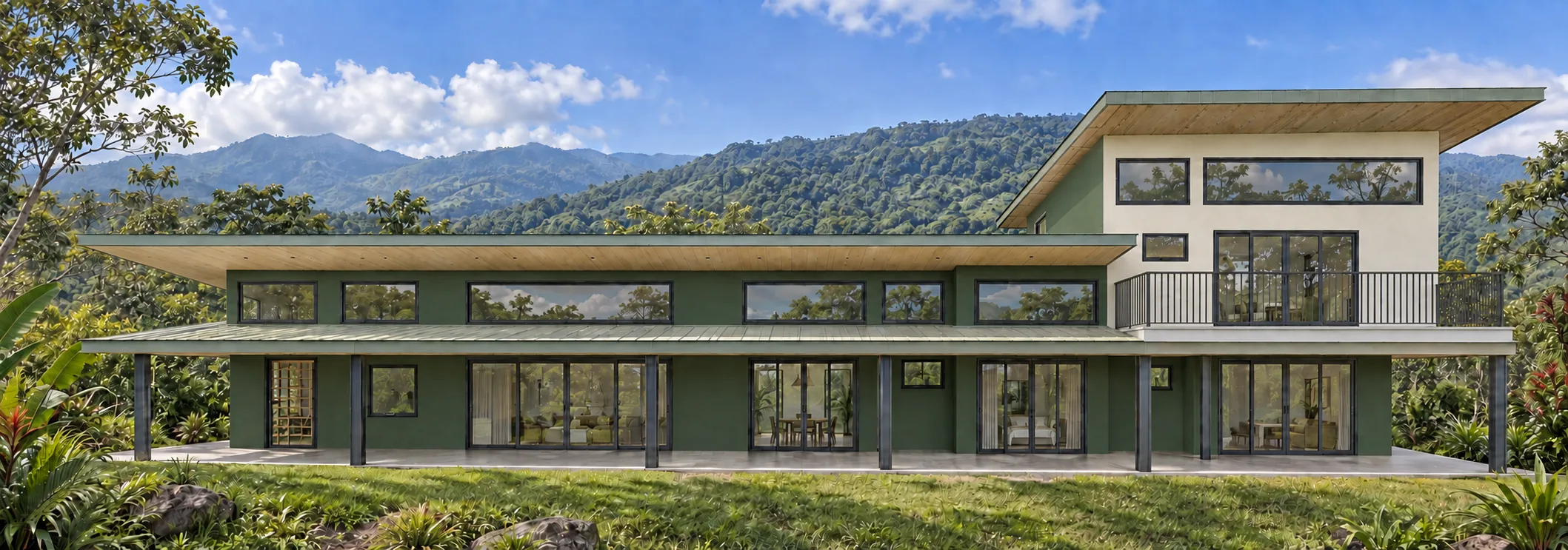
Account for intense light and reflected green
Bright tropical sun can make pale colors look more luminous and can reduce the apparent depth of some mid-tones. Dense vegetation reflects green into shaded walls and covered terraces. Compare samples both in open sun and beside the landscape rather than selecting under store lighting.
Strong roof overhangs create large shaded zones that may show a cooler version of the wall color. A scheme should work across the sunny field, shaded porch, and transitions between them.
Plan for water, growth, and heat
Color cannot replace correct preparation or a climate-appropriate coating. Discuss substrate moisture, mildew resistance, solar exposure, and repaint intervals with the paint manufacturer or an experienced local professional. Some very dark colors may create additional heat considerations on exposed surfaces.
- Notice where rain splashes soil onto lower walls.
- Consider how quickly pale or deep colors will show local dust and biological growth.
- Choose a coating system for the substrate and exposure, then choose color within that system.
Use the landscape without disappearing into it
Muted greens, mineral neutrals, warm whites, clays, and deep charcoals can all work in tropical settings. Decide whether the house should blend with vegetation or stand apart, then compare complete wall, trim, and roof relationships. Confirm finalists outdoors during both dry and wet conditions when possible.