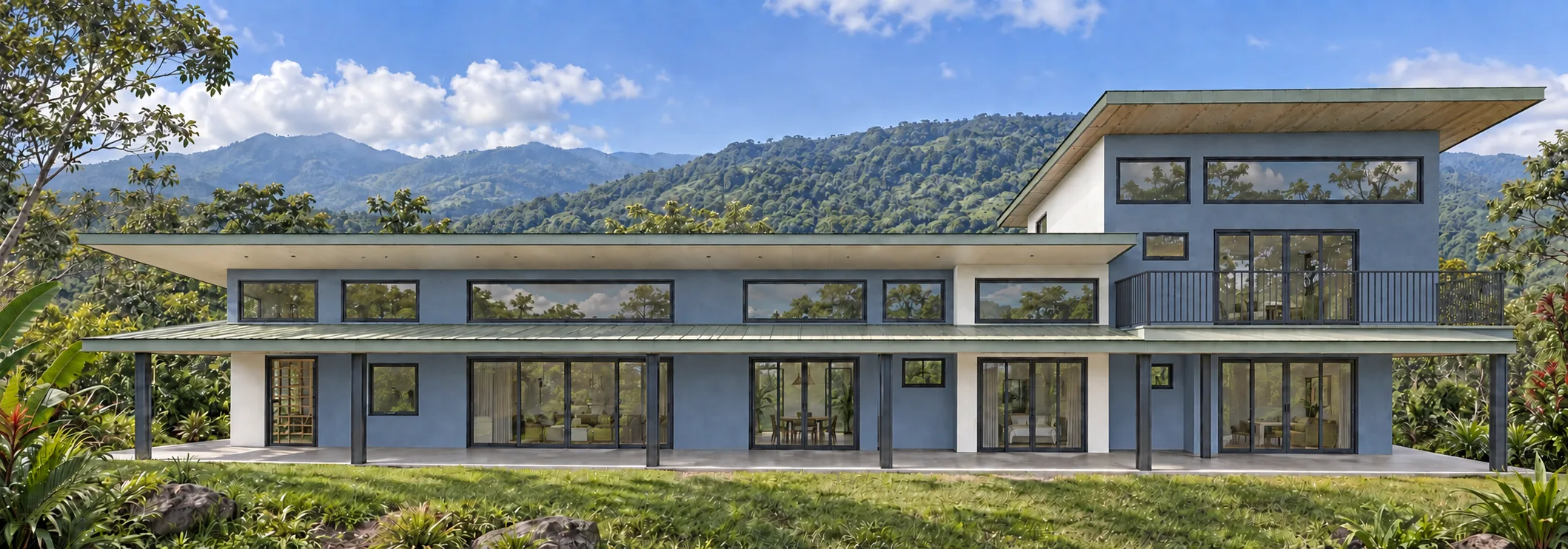
Compare the architectural effect
Light colors tend to emphasize overall volume and cast shadows softly. Dark colors can make forms feel grounded and can visually connect dark windows or roofing. Neither direction is universally more modern or more flattering; the result depends on proportion, detail, and surroundings.
Contrast matters as much as the wall value. Dark walls with light trim outline the house strongly, while dark walls with related trim create a more monolithic shape. Light walls with dark windows can make every opening prominent.
Include exposure and maintenance
Dark surfaces absorb more solar energy and may reach higher temperatures. Product suitability, substrate, climate, and manufacturer guidance matter, especially on materials sensitive to heat. Light walls may reveal mildew, splashback, or airborne dirt differently; dark walls can show dust, fading, and salt deposits.
- Ask the paint and cladding manufacturers about color restrictions.
- Review the most exposed elevations, not only the shaded front.
- Consider cleaning access and local sources of dust, rain splash, or vegetation staining.
Test both directions at useful scale
Create one complete light scheme and one complete dark scheme before debating individual shades. Compare the whole elevation, then sample finalists on multiple orientations. A mid-tone alternative often becomes clearer only after the two ends of the range have been tested.