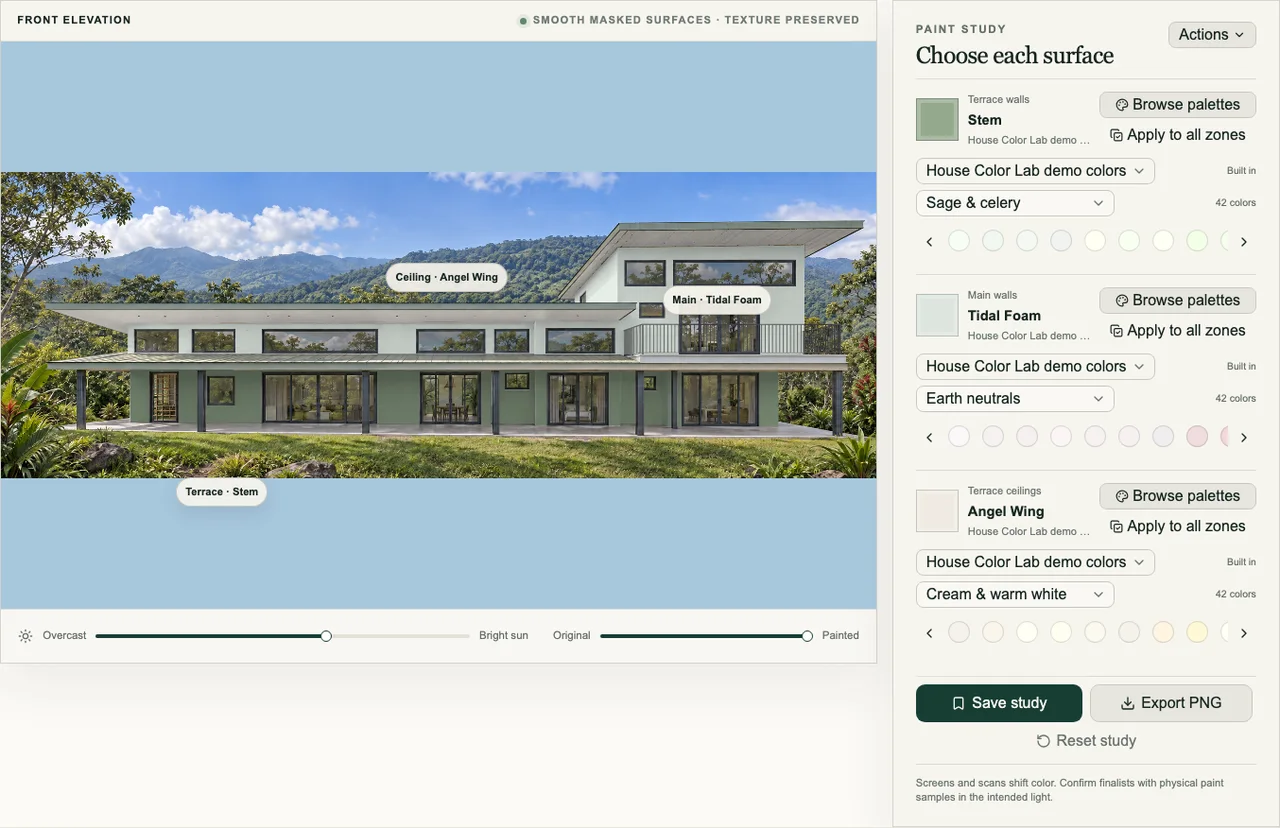
Prepare from the actual project scope
Begin with a clear photograph and the surfaces named in the estimate. Separate walls, trim, fascia, soffits, doors, garage doors, columns, and accents only where the client could reasonably make an independent choice. Keep the roof, windows, stone, brick, and landscape visible because those fixed elements explain why a scheme works.
Verify that every concept is feasible for the specified substrate and coating system. A presentation loses credibility if it promotes a dark color that the cladding manufacturer restricts or includes surfaces that are not part of the proposed work.
Organize the presentation around decisions
Open with the agreed brief and fixed constraints, then show two or three complete directions. Present the most suitable recommendation first and explain its reasoning in plain language. Follow with alternatives that make meaningful changes in value, temperature, or contrast.
- Label the wall, trim, door, and accent assignments on every concept.
- Include paint names and codes only after the broader direction is credible.
- Show a direct side-by-side comparison of the finalists.
- Separate optional scope, such as doors or garage doors, from the base estimate.
Guide the conversation without forcing the choice
Ask the client to react to relationships rather than isolated colors: Does the trim feel too sharp? Does the entry have enough emphasis? Does the wall color belong beside the roof? This produces actionable feedback and demonstrates professional judgment without pretending that taste has one correct answer.
Be explicit that a digital visualization is a planning aid. Its job is to communicate distribution, contrast, and overall direction. The final color decision should move through real manufacturer samples viewed on the property.
Finish with one next action
End the meeting by identifying the leading scheme, the colors that need physical samples, the revision owner, and the approval deadline required to protect the production schedule. Send a concise recap with the compared concepts and the exact open questions. A presentation should reduce uncertainty, not create another folder the client must interpret alone.