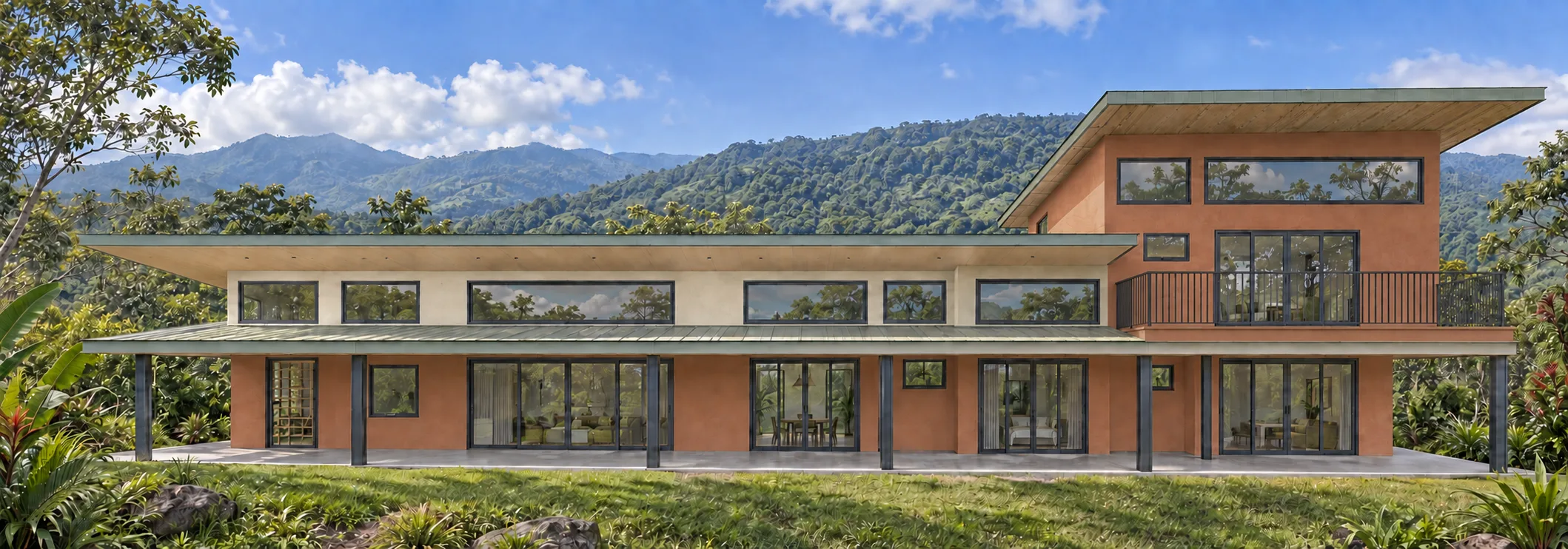
Decide what the trim should do
Trim is not automatically an accent. On some houses it outlines the architecture and deserves clear contrast. On others, high contrast creates too many lines and makes the elevation feel busy. Begin by choosing the role before choosing the color.
- Higher contrast emphasizes edges, openings, and decorative detail.
- Lower contrast produces a quieter, more unified exterior.
- A darker trim can frame light walls and connect dark windows or roofing.
Compare warm, cool, and muted alternatives
Bright white can look much cooler outdoors than expected. Warm off-white, light greige, muted stone, or a lighter version of the wall direction may integrate more naturally with roofing, masonry, and landscape.
If the windows have a fixed factory color, compare trim directly against the frames. A near-match that is slightly wrong can be more noticeable than an intentional contrast.
Review every trim surface together
Fascia, window surrounds, columns, doors, railings, and porch ceilings do not all have to share one color. Visualize them independently first, then simplify where repetition improves the composition. Finish with physical samples placed beside the wall color and the nearest fixed material.